Showing posts with label blood pressure. Show all posts

Thursday, 4 October 2012

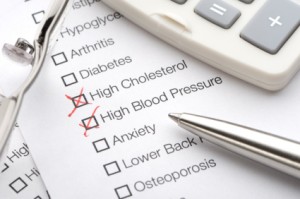
I Have Got Another Reason To Fear High Cholesterol And High Blood Pressure!!


Effect on Cognitive skills
Recent  new study has shown that people with elevated cholesterol and blood pressure in middle age exhibit more problems with their memories as they age, as compared to people with good cardiovascular health.

 The study was conducted in nearly 5,000 people. The researchers looked at several factors to determine cardiovascular risk and found that people with just a 10% higher risk were prone to a quicker rate of cognitive decline.

 The only areas of cognition that seemed unaffected by cardiovascular risk were reasoning in men, and fluency (usually assessed by a word-finding or word-generating task) in women.
So how can you improve cardiovascular health and lower your risk for heart disease and increased cognitive decline?

 According to Mayo Clinic, you should try the following:

1) Choose lower fat protein sources like skim milk, fish, beans, and skinless chicken.
·    2) Try olive oil instead of butter
·    3) Eat lots of fruits and vegetables
·    4) Switch to whole grains for flour, bread, pasta, and rice, and cut the sugar to a minimum
·    5) Cut down on salt and salty condiments like soy sauce
·    6) Whatever you eat, be sure to control portion size so you don’t eat too much
·    7) Don’t smoke
·    8) Get some exercise regularly–even if it’s just a walk
·    9) Reduce stress in your life


      - Team Shirsa


Friday, 7 September 2012

Why You Need It So Badly - Sleep!!!

I came across recent studies and articles about the importance of sleep, so I thought it is very good topic to share with you guys! After writing this, I think I’ll definitely be getting a good night’s sleep tonight–if I can stop worrying about all the sleep I’ve lost to date!

Sleep affects your ability to do a good job at work. A study published in The Journal of Occupational and Environmental Medicine found that people with insomnia or insufficient sleep showed worse productivity and performance on the job. Lack of sleep can have serious consequences on and off the job

A study published in JAMA found that surgeons who worked a night shift and got less than 6 hours of sleep had more complications in the surgeries they performed, compared to others. Another study showed that sleep-deprived medical residents were more likely to crash their cars and make more mistakes on the job.

Poor sleep in kids and teens leads to poor performance in school. studies have shown that kids and teens who get up during the night or don’t get enough sleep do worse in school than their sleep-sound schoolmates. They have problems paying attention and equals more depression and suicidal thoughts in teens. A study on parent-mandated bedtimes found that adolescents who went to bed at 10 PM had significantly lower rates of depression and suicidal thoughts versus those who went to bed at midnight.

Sleep-deprived people don’t realize how impaired they are. Harvard sleep expert Charles Czeisler has been quoted as saying “Like a drunk, a person who is sleep deprived has no idea how functionally impaired he or she truly is. Most of us have forgotten what it really feels like to be awake.”

Lack of sleep combined with alcohol is far more dangerous than you think. Says Cornell expert James Maas, “One drink on six hours of sleep, in terms of your ability to drive a car, is the equivalent of six drinks on eight hours a sleep.

Poor sleep can make you fat and also leads to higher blood pressure. People who sleep less are hungrier and consume more calories–perhaps because they’re looking for food to perk them up. This leads to hormonal changes that make you crave more carbohydrates and make you feel less like exercising.

Beauty and  sleep is not a myth. people were considered to be less attractive and less healthy after sleep deprivation than when they had gotten a full night’s sleep. Lack of sleep can’t be repaired in just one night. Many people believe that one good night’s sleep is sufficient to make up for previous poor sleep, but research has found that chronic sleep loss has residual negative effects, particularly when sleep is lost during the Circadian “night.”

Lack of sleep can literally kill you. People who sleep fewer than six hours a night are 12% more likely to die prematurely than people who sleep between six and eight hours. Another study showed that an average of 7 hours a night for older women was correlated with the best chance of longevity.

- Team Shirsa